
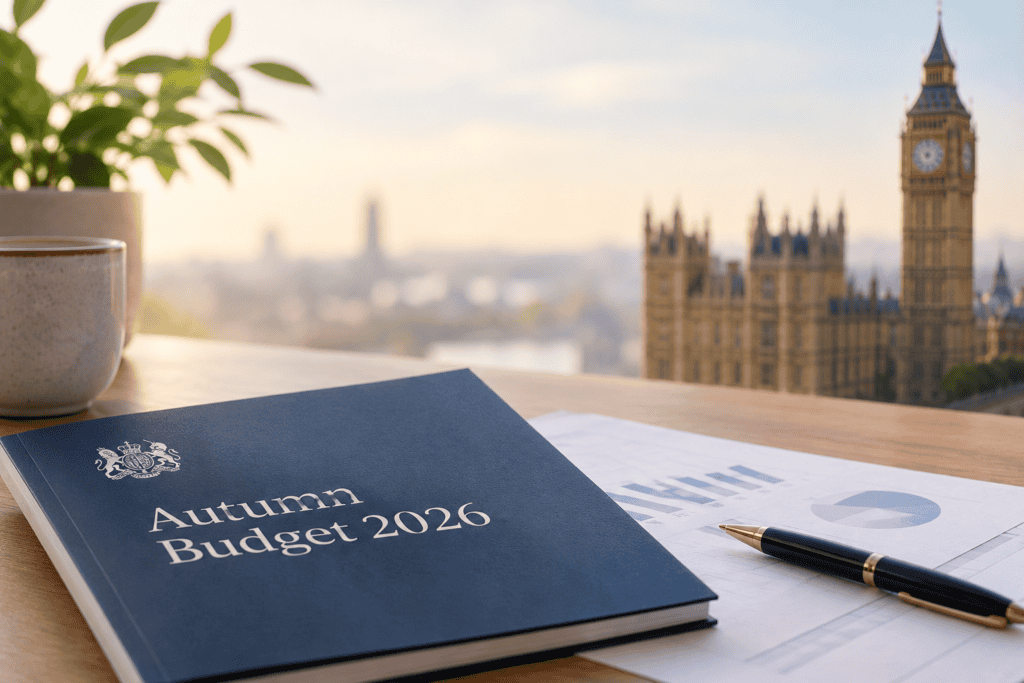
John Healey, the new Chancellor, has delivered his first budget, setting out the government’s plans for tax and spending as well as an update view of the UK’s economic outlook.
Against a backdrop of economic uncertainty and continued pressure on household finances, the Budget was presented as one focused on supporting families, encouraging economic growth, and maintaining fiscal discipline. But what does it mean for you?
Here are some of the key announcements and what they mean for financial planning…
Savings and investments: tax efficiency becomes even more important
From 6 April 2027, the tax rates that apply to savings and property income are increasing by two percentage points:
Basic rate: 24% (previously 22%)
Higher rate: 44% (previously 42%)
Additional rate: 49% (previously 47%)
This makes tax planning more important going forward.
ISA changes: a row back and a change
The chancellor announced the previously announced reduction to cash ISA allowances for the under 65s has been scrapped. This means you will continue to be able to fund cash ISAs up to £20,000 each year. This is a welcome change.
Alongside this, there are plans to introduce a “Starter ISA” for first time investors and a new “First Time Buyer ISA” that will replace the Lifetime ISA from April 2029. Savers will be able to put in up to £4,000 a year and receive a government bonus of 25%, up to a maximum of £20,000. This will be added on withdrawal if used to pay for a first home worth less than £450,000.
Pensions: death benefit changes
A couple of changes with pensions. Currently, where certain pension death benefits are paid more than two years after the pension provider becomes aware of the member’s death, beneficiaries can lose the favourable tax treatment. The government has announced the removal of this two-year rule, with the change applying to payments made from 28 October 2026.
This means beneficiaries will no longer face an Income Tax charge solely because death benefits are paid more than two years after the member’s death.
As previously announced, unused pensions will be brought into your estate for IHT purposes. This means that if you still have money left in your pension pot when you die, it may be subject to a 40% tax.
Pension tax allowance
From 6 April 2027, the State Pension is expected to rise to just over £13,000 a year, taking it above the standard personal allowance. In response, the government is planning a new tax allowance for those over State Pension age that will ensure if they have income at or below the new full State Pension, they won’t pay tax.
Details as to how this will work aren’t available yet.
Business owners: changes to Business Asset Disposal Relief
There were also some important announcements for business owners.
From 6 April 2027, the lifetime limit on gains eligible for Business Asset Disposal Relief (BADR) will reduce from £1 million to £500,000.
BADR provides a reduced Capital Gains Tax rate on qualifying business disposals, and the reduction in the lifetime limit could have significant implications for individuals planning to sell or pass on their businesses.
The government has also announced a new Founders’ Relief, offering a 10% Capital Gains Tax rate on up to £10 million of lifetime gains for qualifying founders of high-growth, innovative companies.
This new relief is expected to be introduced from April 2027, subject to the detailed eligibility rules.
Household finances
The Budget also included measures intended to ease pressure on household finances.
These include:
- An extension of the temporary VAT reduction on domestic electricity until July 2027.
- An extension of the 5p fuel duty cut and freeze until July 2027.
- Increases to the National Living Wage and National Minimum Wage.
While these measures are unlikely to transform household finances individually, they should provide some welcome support at a time when many families continue to face higher living costs.
Our thoughts: good financial planning remains essential
As with every Budget, there will be winners and losers. However, the wider message is that the tax landscape continues to evolve, and the importance of having a clear, joined-up financial plan has arguably never been greater.
There are several areas worth considering:
- Make full use of tax-efficient allowances. ISAs and pensions remain important building blocks of long-term financial planning.
- Review your savings strategy. The forthcoming changes to savings income taxation make it worth reviewing cash holdings and the use of available allowances.
- Think about your estate. Pensions, trusts, beneficiary nominations and Inheritance Tax planning should be considered together.
- Review property investments. Landlords should understand the impact of the forthcoming changes on their net returns.
- Plan ahead if you own a business. Changes to Business Asset Disposal Relief make early succession and exit planning particularly important.
Perhaps the most important point is that financial planning should not be driven by individual Budget announcements or short-term changes in tax legislation. The best decisions are those made in the context of your wider financial circumstances, your family, your aspirations, and the life you want to live.

 Production